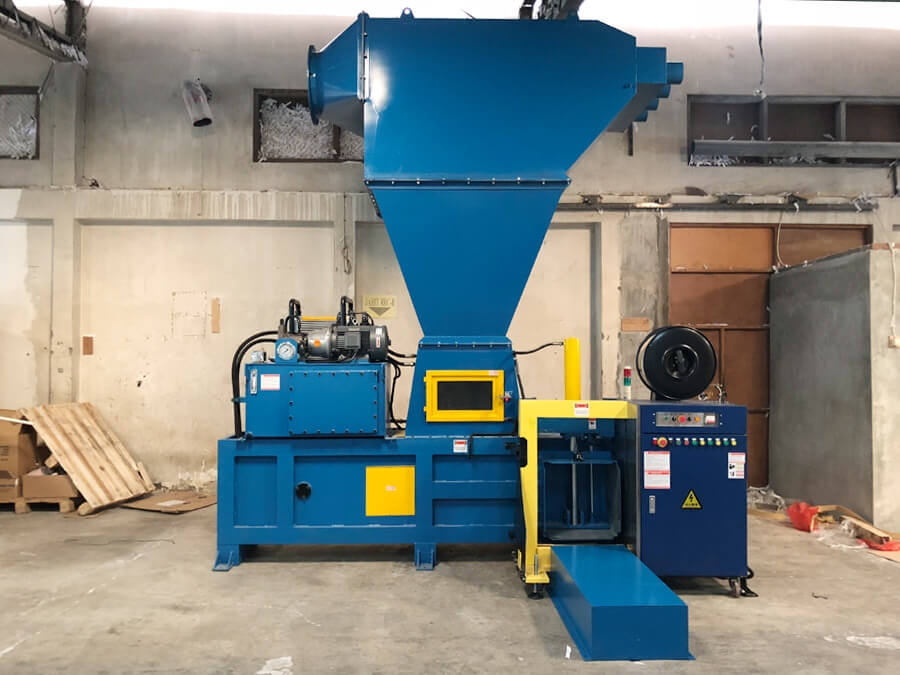
Cardboard and old corrugated containers (OCC) are often the first recyclable material a company wants to bale. The right cardboard baler can reduce storage space, lower hauling frequency, improve workplace cleanliness and create denser bales for recyclers.
The wrong machine, however, can create slow loading, loose bales, extra labor and unnecessary maintenance. This guide explains how to choose between a vertical baler, Horizontal baler and Automatic baler for cardboard recycling.
1. Start with your monthly OCC volume
For low and medium volume facilities, a vertical baler is usually the most economical choice. Retail stores, small warehouses, supermarkets and hotels often choose Vertical Balers because they are compact, simple to operate and easy to place near the waste generation area.
If your operation produces a steady stream of cardboard throughout the day, a horizontal baler may be more efficient. Horizontal Balers can be paired with conveyors, air systems or manual feed stations, making them better for larger warehouses, packaging plants and recycling centers.
2. Compare labor cost, not only purchase price
A lower-cost baler is not always the lowest-cost solution. If operators spend too much time feeding, tying and removing bales, labor cost can quickly exceed the initial savings. For high-volume cardboard recycling, a semi-automatic or fully automatic baler can reduce manual work and improve daily output.
3. Check bale weight and recycler requirements
Before buying, ask your recycler what bale size and bale weight they prefer. Dense, consistent bales are easier to store, load and sell. If you need mill-size bales, a larger vertical baler or horizontal baler may be required.
4. Measure your available space
Confirm ceiling height, door width, forklift access, bale storage area and electrical supply. A baler that looks good on paper may not be practical if bale ejection blocks a walkway or the feed door opens into a busy route.
5. Recommended PACKENER selection path
- Small retail or hotel: compact vertical baler.
- Warehouse with daily OCC: larger vertical baler or semi-automatic horizontal baler.
- Distribution center: horizontal baler with conveyor feed.
- Recycling center or MRF: automatic baler or two-ram baler for higher throughput.
Final advice
Send PACKENER your cardboard volume, site photos, bale weight target and voltage. Our engineers can recommend a practical cardboard baler configuration instead of simply quoting the biggest model.