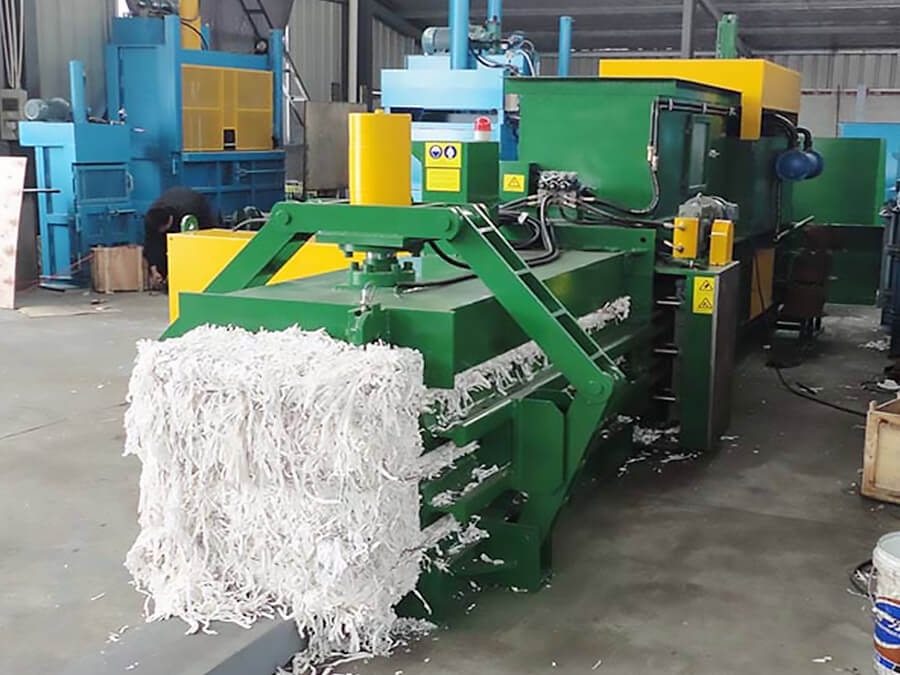
Choosing a hydraulic baler sounds simple at first, but once you start comparing models, the details begin to matter. The right machine depends on the material you handle every day, how much waste you generate, how much space you have, and how much manual work you want operators to do.
That is why the best hydraulic baler is not always the biggest one or the cheapest one. In real recycling work, a good baler is the one that fits the site and keeps running smoothly without creating extra labor or maintenance trouble.
Start With the Material
The first thing to decide is what you are baling. Cardboard, plastic film, PET bottles, textile waste, and scrap metal do not behave the same way under pressure. A machine that works well for OCC cardboard may not be the right choice for aluminum cans or mixed plastic waste.
| Material | How It Behaves | Good Machine Choice | Buying Note |
|---|---|---|---|
| Cardboard / OCC | Compresses well and usually forms stable bales. | Vertical baler or horizontal baler | Choose by daily volume. Small sites can use vertical; larger sites usually need horizontal. |
| Plastic film | Light, springy, and easy to expand after compression. | Horizontal baler or Automatic baler | Stable tying and good chamber design matter a lot. |
| PET bottles | Bulky before pressing and may hold air. | Horizontal baler / automatic baler | Pre-crushing or perforating can help improve density. |
| Textile / used clothes | Soft material that can rebound if the bale is not tied well. | Vertical baler or textile baler | Need good bale shape and tying stability. |
| Light metal scrap | Needs stronger structure and heavier-duty compression. | scrap metal baler | Do not use a light-duty cardboard baler for metal material. |
Match the Machine to Your Daily Volume
Volume decides whether you need a compact machine or a production machine. This is where many buyers make a mistake: they choose only for today's output, then discover the machine is too small six months later.
| Daily Waste Volume | Typical Site | Recommended Type | Why |
|---|---|---|---|
| Low | Retail store, small warehouse, supermarket back room | Vertical hydraulic baler | Lower investment, small footprint, simple operation. |
| Medium | Packaging plant, logistics warehouse, recycling station | Semi-automatic horizontal baler | Better throughput while still keeping cost under control. |
| High | Recycling center, paper mill, large distribution center | Automatic baler machine | Less manual work, faster output, better for continuous feeding. |
Vertical Baler or Horizontal Baler?
This is usually the main choice for most buyers. A vertical baler is compact and practical when space is tight. A horizontal baler is stronger for higher output and continuous feeding. If the waste stream is steady and the site wants to save labor, horizontal usually makes more sense.
| Item | Vertical Baler | Horizontal Baler |
|---|---|---|
| Space | Small footprint, good for limited floor area. | Larger machine body, needs more working space. |
| Feeding | Manual feeding from the front. | Manual, conveyor, forklift, or automatic feeding. |
| Output | Good for low to medium bale quantity. | Better for medium to high daily output. |
| Labor | More manual work. | Less manual work, especially with auto-tie systems. |
| Best For | Shops, small warehouses, supermarkets, light recycling use. | Recycling centers, packaging plants, logistics warehouses, continuous waste streams. |
Do Not Buy by Pressure Alone
Many buyers ask only about tonnage first, but pressure alone does not tell the whole story. Bale size, chamber design, motor power, pump capacity, cycle time, and tying method all affect the final result.
Two machines may both be called “60-ton Balers,” but one may be better suited to cardboard while another is built for tougher material. If the machine does not match the material, it may still run, but the bale quality and machine life can suffer.
Check Bale Size and Bale Weight
Bale size matters for storage, transport, and resale. If the bales are too large, they may be difficult to move. If they are too light or too loose, they may not stack well. It is always better to think about how the bale will be handled after it leaves the machine.
| Question | Why It Matters |
|---|---|
| How will the bale be moved? | Forklift, pallet truck, and manual handling all need different bale sizes. |
| Will the bale be stored or shipped immediately? | Storage and shipping requirements may affect the best bale dimensions. |
| Does the buyer want a specific bale size? | Matching downstream requirements can make resale easier. |
| Is the material sold by weight or by bale? | Density and consistency may affect the final value. |
Think About the Workflow, Not Just the Machine
A baler should fit the way your site actually works. If waste is collected in carts or sacks, feeding height matters. If waste comes from a production line, a conveyor-fed horizontal machine may save more labor. If finished bales need to go straight into a truck or container, discharge direction and bale handling space become important.
Before ordering, walk through the whole process: where waste is generated, where it is stored, who feeds the machine, and how the finished bale is removed. A machine that looks good on paper can become inconvenient if the workflow is wrong.
Tying Method Matters Too
For smaller operations, manual tying is often enough. For bigger volumes, semi-automatic or automatic tying can save a lot of time. The more bales you make in a day, the more valuable automation becomes.
| Tying Type | Best For | Main Advantage | Main Trade-off |
|---|---|---|---|
| Manual tie | Small volume or occasional baling | Simple and lower cost. | More labor required. |
| Semi-automatic tie | Medium volume recycling work | Balanced cost and efficiency. | Still needs some operator involvement. |
| Automatic tie | High volume and continuous operation | Less labor and faster output. | Higher machine cost and more technical maintenance. |
Installation and Power Should Be Checked Early
Before you confirm the order, make sure the power supply, floor space, ceiling height, door width, and unloading path are all ready. A machine that is technically suitable can still become a problem if it cannot be brought into the building or connected properly.
Check local voltage and phase.
Measure the available installation area.
Leave space for maintenance and bale discharge.
Make sure the site has proper material flow and storage space.
Confirm whether a forklift or crane will be used for unloading.
Maintenance Should Be Part of the Buying Decision
A hydraulic baler works under pressure every day, so maintenance access is important. Filters, hoses, oil level, limit switches, and electrical components should all be easy to inspect. A cheaper machine that is hard to maintain can become expensive very quickly.
Ask the supplier about spare parts, maintenance instructions, machine testing, and after-sales support. If you are importing equipment, clear documents and remote support are especially useful.
Common Buying Mistakes
| Mistake | What Happens | Better Way |
|---|---|---|
| Choosing only by price | The machine may be too light, too slow, or expensive to maintain later. | Compare structure, output, support, and long-term value. |
| Buying a machine that is too small | Operators waste time feeding and tying all day. | Think about future volume, not only current volume. |
| Ignoring site layout | The machine is difficult to install or operate. | Measure feeding area, discharge area, and transport route before ordering. |
| Using the wrong baler for the material | Poor bale density, unstable bales, or overload risk. | Match the machine to cardboard, plastic, textile, PET, or metal material. |
| Not checking support | Long downtime if a problem appears after delivery. | Ask about manuals, spare parts, and remote technical support before shipment. |
Practical Buying Route
If you are still deciding, this order usually works well:
For small shops, supermarkets, and warehouses with limited space, start with a vertical baler.
For steady cardboard or packaging waste, compare Horizontal Balers and semi-automatic balers.
For high-volume recycling operations, look at automatic baler machines.
For aluminum cans, metal scrap, and other metal materials, choose a dedicated scrap metal baler.
Final Checklist Before You Ask for a Quote
Material type
Daily or monthly output
Preferred bale size or bale weight
Local voltage and power conditions
Site photos or layout drawings
Automation level you want
Destination country and any special requirements
A good hydraulic baler should make the recycling job easier, not harder. If the machine matches your material, output, workflow, and site layout, it will usually give you better bale quality, smoother operation, and less trouble later.
For more machine options, you can also visit baler machines, Vertical Balers, horizontal balers, automatic baler machines, and scrap Metal Baler Machines.