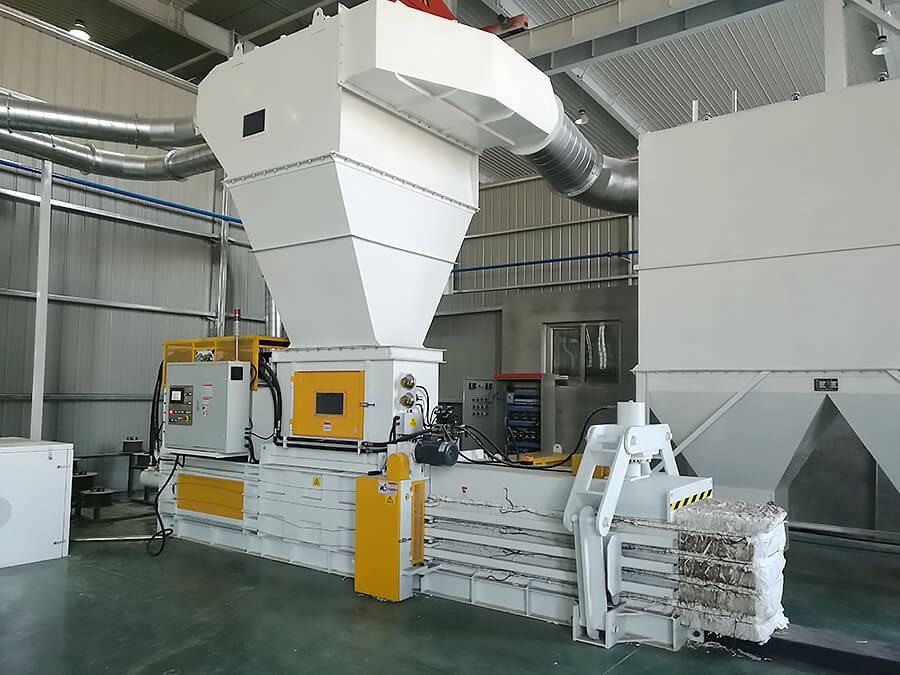
Plastic film is light, bulky and difficult to store. Stretch wrap, LDPE film, woven bags and soft packaging can fill containers quickly even when the actual material weight is low. A suitable plastic film baler helps reduce volume, improve handling and prepare cleaner bales for recycling.
Why plastic film is different from cardboard
Unlike cardboard, plastic film has strong rebound. It can expand after compression if the chamber, tying method or dwell time is not suitable. This is why plastic film baling often needs a wide feed opening, good chamber depth, stable hydraulic pressure and enough time for compression.
Key factors when choosing a plastic film baler
Feed opening
Plastic film often comes from pallets, packaging lines or collection bags. A wider feed opening reduces cutting and manual preparation, making daily operation faster.
Press force and bale density
Higher press force is helpful, but the baler must also hold pressure long enough to reduce rebound. Dense bales are easier to stack, transport and sell.
Tying method
Loose tying can allow soft plastic bales to expand. Operators should use proper wire or strap strength and follow a consistent tying pattern.
Material cleanliness
Film contaminated with food waste, water, dust or mixed materials may have lower recycling value. A baler improves logistics, but sorting and cleanliness still matter.
Which baler type is suitable?
- Vertical baler: good for retail, warehouses and medium film volume.
- Horizontal baler: better for continuous packaging lines or distribution centers.
- Automatic baler: suitable when film volume is high and labor savings are important.
- Two-ram baler: useful when your facility switches between film, cardboard, PET and other materials.
Information to send before requesting a quote
To recommend a practical plastic film baler, PACKENER needs material photos, daily or monthly loose volume, target bale size, available floor space, power supply and whether the material is fed manually or by conveyor.
A good plastic film baling system is not just about pressure. It is about feed efficiency, bale stability and matching the real workflow of your facility.